
Full-Service Video Production: What It Includes and Why It Matters
Full-service video production means one team manages a project from pre-production planning through post-production and final delivery. That single point of continuity makes campaigns more consistent, easier to manage, and better equipped to produce content across multiple formats and channels. For agencies and brands running campaigns with more than one deliverable, the difference between integrated production and fragmented production shows up in the work — and in the process.
ProFor is a commercial video production company based in Austin, Texas, supporting agencies and brands across campaigns that may include commercials, social content, live event coverage, and photography.
What full-service video production actually includes
Full-service video production covers the complete production arc: pre-production planning, shoot execution, post-production, and final delivery across all required formats.
Pre-production is where the project gets structured. This includes understanding the brief, planning shoot logistics, coordinating locations, casting talent, and building a production schedule that accounts for every deliverable the campaign requires. Good pre-production is where multi-deliverable projects stay manageable and on-budget.
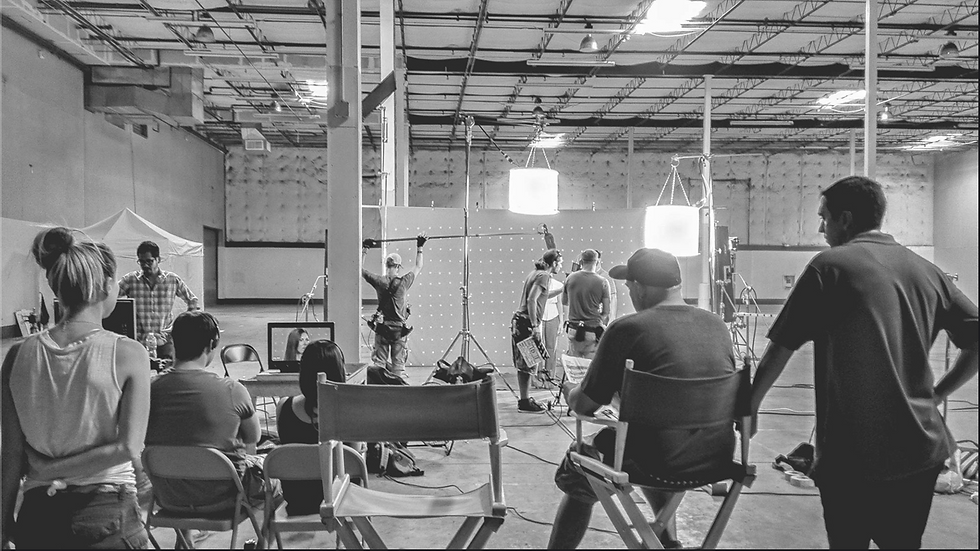
Shoot execution covers everything that happens on set or on location: directing, cinematography, lighting, sound, production design, and the coordination of cast, crew, and client needs. On larger productions, this extends to multi-unit crews working across multiple locations simultaneously.
Post-production covers editing, color, sound design, and delivery. On campaigns with multiple deliverables, post includes every required cutdown, adaptation, and format variation. A single shoot might yield broadcast commercials in multiple lengths, social versions in multiple aspect ratios, photography, and additional assets for specific channels or audiences.
That last point is what separates full-service video production from standard production. It is not simply about handling more of the work. It is about keeping all of it inside one production system, so the brief stays intact from first day of pre-production to final delivery.
Why it produces better results than piecemeal production
When different vendors handle different parts of a production — or different deliverables from the same project — problems appear that are hard to trace until the work is already done.
Brief drift is one of the most common. When one team handles the shoot and a separate vendor handles post-production or social adaptations, the original intent can shift at every handoff. Look, tone, and pacing become inconsistent across formats. The broadcast commercial feels different from the social version. The photography no longer feels aligned with the video.
Coordination overhead is another real cost. Managing multiple vendors, tracking deliverables across teams, and aligning production timelines creates significant work for producers and marketing managers, especially on high-output campaigns with many moving parts.
There is also a turnaround cost. When adaptations and cutdowns are handled by a vendor who was not part of the original shoot, there is a re-briefing step, a production re-sync, and a delay that integrated post-production avoids.
For teams focused on maximizing video ROI, fragmentation works against the goal. Having the same assets reinterpreted by multiple vendors does not improve them. It makes them more expensive to produce and harder to keep consistent.
When full-service production matters most
Full-service production is not the right model for every project. A single-deliverable shoot does not necessarily require it. But as campaign scope grows, the case for integrated production becomes harder to avoid.
Multi-format campaigns. When a production needs to yield broadcast spots, social cutdowns, photography, and digital assets, a single production system allows all of those outputs to be planned from the beginning — not adapted after the fact.
Bilingual or versioned campaigns. When content needs to exist in multiple languages or for multiple markets, managing bilingual scripts, cast, and delivery within one production keeps quality and tone consistent across every version. On a multi-year bilingual campaign for Texas Mutual Insurance Company, ProFor produced eight story-driven pieces, each delivered in five video formats plus bilingual radio plus photography — all from an integrated production approach that managed English and Spanish versions throughout.
High-output shoots. On one USAA campaign, a four-day shoot produced 16 social spots, 6 broadcast commercials, and a full photography package. One shoot day covered 4 scenes and 8 cast members. That kind of output requires post-production to be built into the production plan from day one, not added at the end.
Live event and activation coverage. When events need to produce same-day social content, recap videos, and multi-platform outputs, a production team that handles capture through delivery keeps quality intact under pressure. Coverage of CoinDesk’s Consensus conference included multiple filming units across the Austin Convention Center and downtown venues, producing five daily recap videos plus a full event recap — all on a fast-turn timeline.
Campaigns with animation or format extensions. When a campaign’s content mix includes animation or format types beyond standard video, planning for those outputs inside the original production brief keeps them consistent with the rest of the work.
What to look for in a full-service production partner
Not every production company that describes itself as full-service operates that way. The right partner should demonstrate a few specific things.
Range across deliverable types. A track record that includes broadcast commercials, social content, photography, and event coverage — not just one format — confirms that the team can actually execute across a full campaign content mix, not just one part of it.
Ability to support multiple deliverable types from one production system. Ask how they plan for multi-format output. A team that plans for post-production during pre-production will handle multi-deliverable campaigns differently from a team that tries to solve adaptations later in the edit.
Experience managing production complexity. Multi-location shoots, large casts, bilingual requirements, and split-crew production days all require coordination experience that goes well beyond running a small crew on a single day.
Transparent process. Budget surprises and unclear production timelines are a leading source of friction on campaigns. A production partner should be able to tell you what is included, what is not, and how scope changes will be handled before the shoot starts. Clients consistently describe ProFor’s process as clear, responsive, and easy to work through.
Repeat client relationships. Long-term relationships are some of the clearest proof that a production company is reliable and good to work with over time. A client who returns for a second campaign, a third, or an eleventh year has already answered the question of whether the process works.
Frequently Asked Questions
What is the difference between full-service video production and standard video production?
Standard video production typically delivers one asset — one edit, one format, one output. Full-service video production means one team manages the entire project from pre-production through post, producing multiple formats, cutdowns, and adaptations under a single production system. The practical difference is continuity: the brief, tone, and intent stay intact across every deliverable because one team is responsible for all of them.
Does ProFor work with agencies or directly with brands?
Both. ProFor works as a production partner for advertising agencies, creative agencies, and brand marketing teams. For agencies, ProFor supports execution without stepping into the agency’s creative or strategic role. For brand-side teams, ProFor functions as an external production partner that integrates into the existing workflow and reporting structure.
Is full-service production the right choice for every campaign?
No. A single-deliverable project does not require full-service production infrastructure. Full-service becomes the more practical model when a campaign requires multiple formats, bilingual versions, photography alongside video, high-volume deliverables, or ongoing content support across a campaign flight or quarter.
What kinds of content can a single full-service production yield?
A single production can generate far more than one finished asset. The specific mix depends on the campaign — some include broadcast, social, and photography together; others add bilingual versions or animation. The defining advantage is planning every output format before the first shoot day, so all of them stay consistent in look and intent without requiring a separate production for each.
Choosing a partner for broader campaign production needs
Full-service video production is not just a label. It is a way of structuring a production so the brief, the process, and the final deliverables stay inside one accountable system.
For agencies and brand teams managing campaigns that span multiple formats, markets, or delivery timelines, that structure reduces execution risk, keeps content consistent, and makes the process easier to manage from the client side.
See a recent campaign example to get a sense of what full-service production looks like at scale.
Start the Conversation — or reach out to talk through your next project.


